


For anyone serious about training, the question eventually comes up: What should I be aiming for? Not just in terms of strength or body fat, but actual body measurements—arms, chest, waist, legs. Many lifters want a clear target, a set of numbers that defines the “ideal” physique. While that desire is understandable, the truth is more nuanced. Ideal body measurements are less about chasing exact inches and more about developing balance, proportion, and a look that fits your own structure.
Over the years, countless formulas have been proposed to define the perfect male physique, particularly for natural bodybuilders and fans of the classic, aesthetic look. These systems can be interesting and sometimes useful, but they should be approached as guidelines rather than rigid standards.
Why Measurements Matter (and When They Don’t)
Body measurements can be a valuable tool. Tracking circumferences—such as chest, waist, hips, arms, thighs, and calves—gives you objective feedback on how your training and nutrition are working. If your arms and shoulders are growing while your waist stays the same or shrinks, that’s usually a good sign. If your waist and hips are expanding faster than everything else, you may be gaining more fat than muscle.
Among all measurements, waist size stands out as especially important. A shrinking waist typically signals fat loss, and even a small reduction can dramatically change how your physique looks. A narrower waist enhances the appearance of broader shoulders and a larger chest, creating that classic V-taper. Beyond aesthetics, excess abdominal fat is also linked to health risks, making waist measurement a practical marker for overall well-being.
That said, bodybuilding and physique development are ultimately visual pursuits. No judge—or mirror—rewards you for hitting an exact arm circumference if the overall look is unbalanced. Numbers can inform your progress, but they shouldn’t dictate your sense of success.
Chasing a Look, Not a Tape Measure
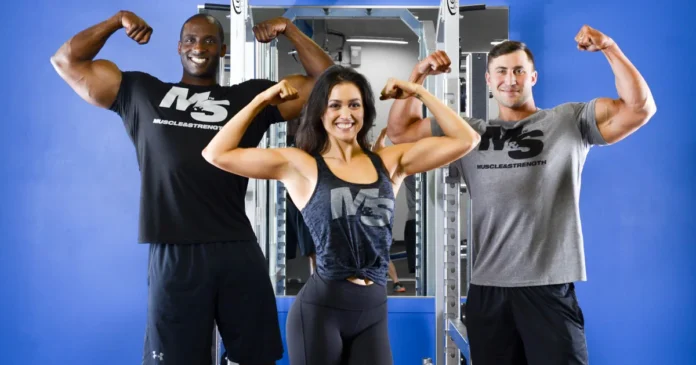
Rather than aiming for specific measurements, many experienced lifters focus on achieving a certain look. This means developing symmetry, balance, and proportion so that no single body part overwhelms the others. A massive chest paired with underdeveloped arms looks awkward. Huge arms with small legs break the illusion of strength and athleticism.
Visual benchmarks can be more powerful than numerical ones. Photos of physiques you admire—especially natural, well-proportioned athletes—provide a clear standard to work toward. Over time, this approach naturally guides your training priorities, helping you bring up lagging body parts while maintaining overall harmony.
Bodyweight itself can also be misleading. Scale weight fluctuates with water retention, glycogen levels, and seasonal changes in body fat. For competitive athletes, weight classes matter, but for most people, the mirror and how clothes fit are far better indicators of progress than a single number on the scale.
The Classic Ideal: Steve Reeves and Proportion
When discussions turn to “ideal” measurements, the name Steve Reeves often comes up. Reeves, one of the most admired physiques of the classic era, was known for symmetry and aesthetic appeal rather than sheer size. His proportions are still referenced today because they reflect balance rather than extremity.
Reeves believed in harmony between muscle groups and famously aimed to have his arms, calves, and neck measure the same. His personal ideal measurements included an 18.5-inch arm, calf, and neck, a 54-inch chest, a 30-inch waist, and 27-inch thighs. These numbers weren’t about being massive—they were about being visually complete.
He also introduced proportional formulas based on bone structure, such as wrist, ankle, and knee measurements. The idea was simple: your skeleton sets the framework, and muscular development should complement it. This approach acknowledged genetic differences and avoided the trap of one-size-fits-all expectations.
Reeves even outlined ideal bodyweights based on height, suggesting, for example, around 175 pounds for someone 5’8” and 200 pounds for someone 6’0”—figures that still align closely with what many natural bodybuilders achieve today.
Realistic Expectations for Natural Lifters
Another well-known approach comes from John McCallum, later discussed by Stuart McRobert in Brawn. This system was designed specifically for “hard gainers” and emphasized achievable, drug-free development. McCallum’s formulas use wrist size to estimate realistic chest, arm, thigh, and calf measurements, offering targets that challenge you without setting you up for disappointment.
What’s important about these older systems is their honesty. They recognize that bone structure, genetics, and natural limits play a huge role in how much muscle you can carry—and where.
This is where caution is essential. Many modern “ideal” measurements are influenced by enhanced athletes or exaggerated claims. Twenty-inch arms, for example, are extraordinarily rare in real life, especially on lean physiques. Yet beginners often assume that such numbers are standard benchmarks for success.
In reality, a lean, symmetrical physique with 17–18 inch arms at a bodyweight under 180 pounds can look far larger and more impressive than the numbers suggest. Proportion, conditioning, and balance create powerful visual illusions that no tape measure can fully capture.
The Big Picture: Your Ideal Is Personal
Ultimately, ideal body measurements are subjective. Some ideals are rooted in classical Greek aesthetics, others in bodybuilding tradition, and others still in personal preference. None of them are universal laws.
Use measurements as tools, not verdicts. Let them guide your progress, highlight imbalances, and keep body fat in check—but don’t let them define your self-worth or enjoyment of training. Your structure, genetics, and goals are unique, and your “ideal” physique should reflect that.
In the end, the most important opinion about your body is your own. Build a physique that looks right to you, feels healthy, and represents consistent effort over time. The rest is just math.