
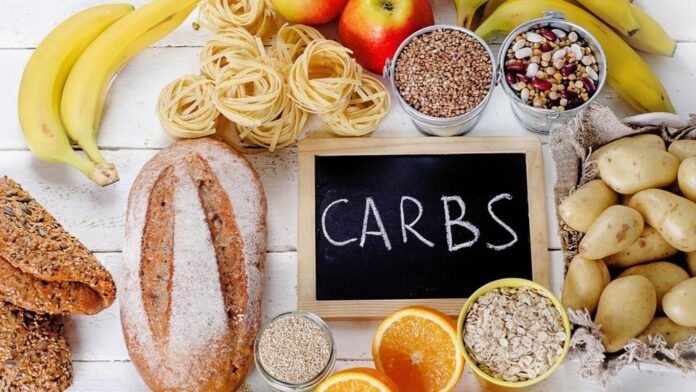


When it comes to appetite and weight management, few questions spark as much debate as this one: Does eating more carbohydrates make you feel fuller? At first glance, it sounds simple. Many people think carbohydrates — especially fibrous ones like whole grains and starchy vegetables — help control hunger. Others counter that carbs, particularly refined ones, simply fuel cravings and lead to overeating. So who’s right?
Let’s walk through what the science actually tells us.
Understanding Satiety: More Than Just One Macros
First, it helps to understand what researchers mean by satiety. Satiety is the state of feeling full and satisfied after a meal — the feeling that delays your next meal and helps control overall calorie intake. It’s different from satiation, which is what stops you from eating more during a meal. Both processes are influenced by physiological signals (like gut hormones and blood glucose levels) and by psychological factors, such as food texture and portion size.
Contrary to popular belief, satiety isn’t governed by one single nutrient. In fact, among the macronutrients — protein, carbohydrates, and fats — protein generally produces the strongest feeling of fullness per calorie, while carbohydrate tends to fall somewhere in the middle, and fats the least satiating when measured calorie‑for‑calorie.
What Research Says About Carbs and Fullness
So where do carbohydrates fit into this picture? The claim “high‑carb diets equal high satiety” isn’t universally supported in the scientific literature.
Some research suggests that whole‑food sources of carbs — such as legumes, whole grains, and high‑fiber fruits and vegetables — can promote fullness because they slow digestion and blunt post‑meal blood sugar spikes. Dietary fiber, in particular, has been shown to increase feelings of satiety when calories are held constant.
However, trials that directly compare high‑carb meals to lower‑carb meals don’t consistently show that higher carbohydrate intake automatically leads to greater satiety. For example, short‑term studies examining hunger and fullness ratings after meals with differing carbohydrate levels have found mixed results, with no clear advantage for high‑carb diets when the protein content and total calories are equal.
Carbohydrate Quality Matters More Than Quantity
One of the key takeaways from satiety research is that the quality of carbohydrates matters a lot — sometimes more than the amount:
- Complex, high‑fiber carbohydrates (think whole grains, beans, sweet potatoes) tend to digest more slowly, leading to a more gradual rise in blood sugar and prolonged fullness.
- Refined carbohydrates (such as white bread, pastries, and sugary snacks) are digested quickly and can lead to rapid changes in blood glucose and insulin. These blood sugar fluctuations are often followed by a quick return of hunger — the opposite of lasting satiety.
In other words, a bowl of oatmeal with nuts and berries may help keep you satisfied longer than an equivalent amount of calories from a sugary breakfast pastry.
Comparing Dietary Patterns: High‑Carb vs. Low‑Carb
Some studies have compared overall diets that vary in carbohydrate content to see how they affect hunger and fullness over time. Interestingly, evidence suggests that:
- High‑carbohydrate diets do not necessarily lead to greater overall satiety compared with lower‑carbohydrate diets when overall calorie intake and protein are matched.
- Lower‑carb diets may improve some metabolic markers like blood glucose and insulin levels, but this doesn’t automatically translate to better appetite control for every person.
This underscores a bigger point in nutrition science: people respond differently to diets based on individual metabolism, food choices, and lifestyle.
How This Fits Into Real‑World Eating
If you’re wondering how to apply these insights in daily life, here are a few practical takeaways:
1. Focus on nutrient‑dense, minimally processed carbs.
Whole grains, legumes, and vegetables add bulk and fiber to meals, which can improve satiety without excessive calories.
2. Balance macronutrients in meals.
Including sources of lean protein and healthful fats alongside carbohydrates helps slow digestion and contributes to longer‑lasting fullness.
3. Don’t assume carb quantity alone determines hunger.
It’s the quality and context of carbohydrates — type of food, fiber content, and portion size — that has the biggest influence on how full you feel.
4. Personal experience counts.
Some people naturally feel more satisfied on moderate‑ to higher‑carb eating patterns. Others do better with lower carbohydrate intake. There’s no one‑size‑fits‑all prescription.
The Bottom Line
The notion that high‑carbohydrate diets are intrinsically more satiating isn’t strongly supported when you strip away myths and look at the evidence. Rather than focusing solely on the amount of carbohydrates you eat, pay attention to the types of carbs, total calorie balance, and overall dietary pattern.
High‑quality carbohydrates — especially those rich in fiber — can certainly contribute to feelings of fullness, especially when paired with protein and healthy fats. But simply increasing carbs without regard to food quality or total calories is unlikely to magically curb hunger on its own.
Ultimately, effective appetite control is about smart food choices and balanced meals, not just one nutrient category.